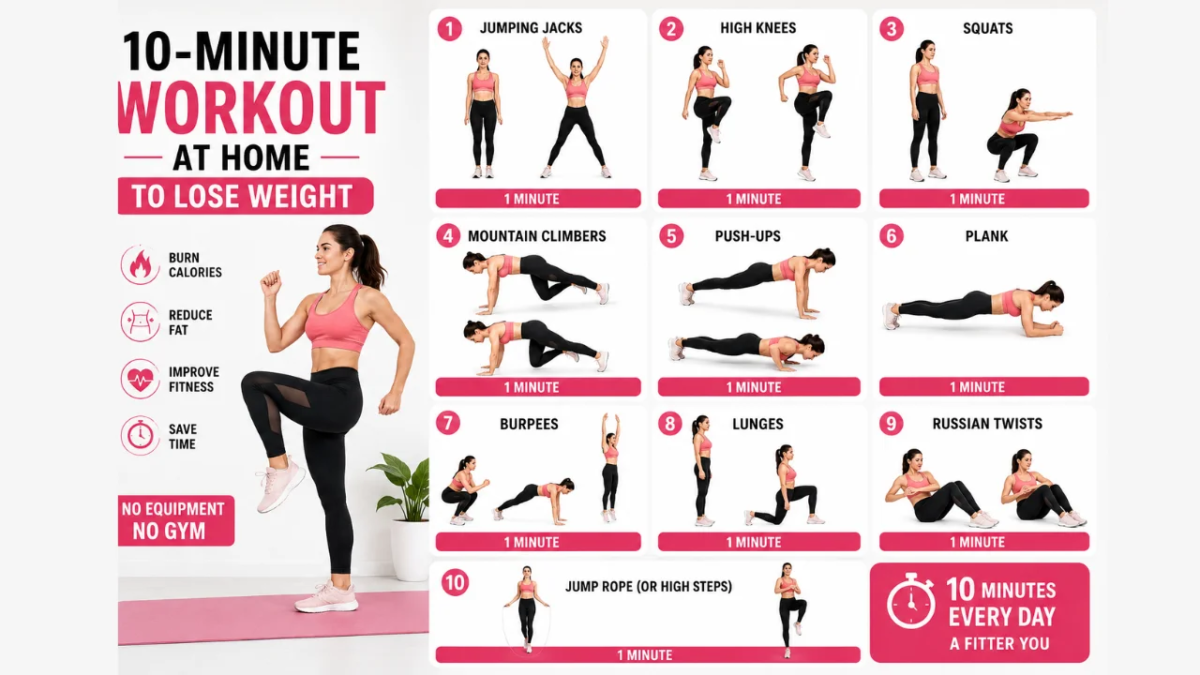
Burn Fat Fast Without a Gym 10-minute workout at home to lose weight is one of the easiest ways to burn fat and stay fit without going to the gym.10-minute workout at home to lose weight is one of the easiest ways to burn fat and stay fit without a gym.
You do not have time. You do not have equipment. You do not have a gym membership. Benefits of a
Good news — you need none of that.
Science proves that a focused is far more effective than 30 minutes of slow cardio. Your body continues burning calories for hours after — even while resting.
Why a 10-Minute Workout at Home to Lose Weight Actually Works
Short intense workouts trigger EPOC — Excess Post-Exercise Oxygen Consumption. This means your body keeps burning fat long after you finish.is one of the best ways to burn fat quickly without gym equipment.
10 focused minutes beats 30 minutes of walking — every single time.
This helps burn calories fast.
A 10-minute workout at home to lose weight is perfect for busy people.
Many beginners try this without gym equipment.
Doing a daily can improve fitness and reduce fat.
The Best
No equipment needed. Do each exercise for 40 seconds, rest 20 seconds, then move on.
Calories burned: 3–5 per minute (massive afterburn)
⏱️ Minute 6 — Reverse Lunges
Step one foot backward
Lower back knee toward floor
Push back and alternate legs
Calories burned: 8–10 per minute
⏱️ Minute 7 — Mountain Climbers
High push-up position
Drive knees toward chest alternately
Go as fast as possible
Calories burned: 10–15 per minute
⏱️ Minute 8 — Glute Bridges
Lie on back, knees bent
Lift hips toward ceiling
Squeeze glutes hard at top
Calories burned: 5–8 per minute
⏱️ Minute 9 — Burpees
Squat down, jump feet back
Do one push-up
Jump feet forward, explode upward
Calories burned: 10–15 per minute
⏱️ Minute 10 — Cool Down Stretching
Quad stretch, hamstring fold
Chest opener, deep breathing This 10-minute workout at home to lose weight helps burn calories fast.
A is perfect for busy people.
Many beginners try this without gym equipment.
Doing a daily can improve fitness and reduce fat.
How Many Calories Does This 10-Minute Home Workout Burn?
Body Weight
Calories Burned
55 kg
80–100 calories
70 kg
100–130 calories
85 kg
130–160 calories
100 kg
160–190 calories
Tips to Maximize Your 10-Minute Workout at Home to Lose Weight
Be Consistent — Do it every single day
Eat Clean — Cut processed foods and sugar
Stay Hydrated — Drink 2–3 liters of water daily
Sleep Well — 7–8 hours for maximum fat burning
Progress Gradually — Add a second round as you get stronger
30-Day Challenge Using This 10-Minute Home Workout to Lose Weight
Week
Goal
Week 1
Once daily
Week 2
Twice daily
Week 3
Workout + 5 min walking
Week 4
Twice daily + clean eating
Frequently Asked Questions
Can a 10-Minute Workout at Home Really Help Lose Weight?
Yes! Consistency is the key. Daily 10-minute high-intensity sessions create a significant calorie deficit over time.
How Soon Will I See Results From a
Most people notice visible changes within 2–3 weeks of daily practice combined with clean eating.
Is This 10-Minute Workout at Home Safe for Beginners?
Absolutely. Every exercise has a beginner modification. Start slow and build intensity gradually. This helps burn calories fast.
A 10-minute workout at home to lose weight is perfect for busy people.
Many beginners try this without gym equipment.
Doing a 10-minute workout at home to lose weight daily can improve fitness and reduce fat.
Final Thoughts
A 10-minute workout at home to lose weight is all you need to start your fitness journey today. No gym. No equipment. No excuses.10-minute workout at home to lose weight
10 minutes a day. 30 days. Life-changing results.
Start right now. 💪 This 10-minute workout at home to lose weight is perfect for beginners.
Many people use this 10-minute workout at home to lose weight without gym equipment.
If you want fast fat burn, try this
Disclaimer: Consult your doctor before starting any new exercise program. 10-minute workout at home to lose weight This 10-minute workout at home to lose weight helps burn calories fast.
A 10-minute workout at home to lose weight is perfect for busy people.
Many beginners try this without gym equipment.
Doing a daily can improve fitness and reduce fat. Benefits of a
This 10-minute workout at home to lose weight helps burn calories fast.
A 10-minute workout at home to lose weight is perfect for busy people.
Many beginners try this without gym equipment.
Doing a 10-minute workout at home to lose weight daily can improve fitness and reduce fat. This 10-minute workout at home to lose weight is simple and beginner friendly.
Many people choose a because it saves time and improves fitness.
Doing a every day can help reduce belly fat and increase stamina.
How to Sleep Better Without Pills Naturally (2026 Guide)
Millions of people struggle with poor sleep every night. Before reaching for sleeping pills — which can cause dependency and side effects — there are powerful, proven natural methods to help you sleep deeper, longer, and more restfully.how to sleep better without pills
🌙 Why Sleep Matters More Than You Think
Sleep is not just rest. It’s when your body:
Repairs muscles and tissues
Consolidates memory and learning
Regulates hormones and metabolism
Strengthens your immune system how to sleep better without pills
Chronic poor sleep is linked to heart disease, obesity, depression, and even early death. Getting it right naturally is one of the best investments in your health.
✅ Top Natural Ways to Sleep Better
1. Fix Your Sleep Schedule how to sleep better without pills
Your body runs on a circadian rhythm — an internal 24-hour clock. Going to bed and waking up at the same time every day (even weekends) is the single most powerful sleep habit you can build.
Tip: Set a “bedtime alarm” 30 minutes before sleep as a reminder to wind down.how to sleep better without pills
2. Limit Blue Light After Sunset
Phones, laptops, and TVs emit blue light that tricks your brain into thinking it’s daytime, suppressing melatonin production.
What to do:
Use Night Mode or blue light glasses after 8 PM
Stop screen use 1 hour before bed
Read a physical book instead
3. Make Your Bedroom a Sleep Sanctuary
Your environment sends powerful signals to your brain.
Factor
Ideal Condition
Temperature
18–20°C (65–68°F)
Light
Complete darkness
Sound
Silent or white noise
Bedding
Clean, comfortable, breathable
Pro tip: Use blackout curtains and an eye mask for maximum darkness.
4. Try the 4-7-8 Breathing Technique
This simple breathing exercise activates your nervous system’s rest response:
Inhale through your nose for 4 seconds
Hold your breath for 7 seconds
Exhale slowly through your mouth for 8 seconds
Repeat 4 times
It lowers heart rate and anxiety within minutes.
5. Natural Sleep-Boosting Foods & Drinks
What you eat affects how you sleep.
Eat more of:
🍒 Tart cherries — natural melatonin source
🍌 Bananas — magnesium and tryptophan
🥜 Almonds & walnuts — promote melatonin production
🥛 Warm milk — classic tryptophan boost
Avoid before bed:
☕ Caffeine (stop by 2 PM)
🍷 Alcohol (disrupts deep sleep)
🍕 Heavy, spicy meals within 2–3 hours of sleep
6. Magnesium — Nature’s Relaxation Mineral
Magnesium deficiency is extremely common and directly linked to poor sleep. It calms the nervous system and promotes deep, restorative sleep.
Sources:
Magnesium glycinate supplement (best absorbed)
Dark leafy greens (spinach, kale)
Pumpkin seeds, dark chocolate
7. Exercise — But Time It Right
Regular physical activity significantly improves sleep quality. However, timing matters:
✅ Morning or afternoon exercise — boosts sleep quality
⚠️ Intense exercise within 2 hours of bed — can delay sleep
Even a 20–30 minute walk daily makes a measurable difference.
8. Manage Stress and Anxiety Before Bed
Racing thoughts are one of the biggest sleep killers. Try these before bed:
Journaling — Write down tomorrow’s tasks to “offload” your mind
Meditation — Even 10 minutes with apps like Calm or Headspace
Gratitude practice — Write 3 things you’re grateful for
Progressive muscle relaxation — Tense and release each muscle group from toes to head
9. Natural Herbal Remedies That Work
These herbs have scientific backing for improving sleep:
Herb
Benefit
Ashwagandha
Reduces cortisol, eases anxiety
Valerian Root
Shortens time to fall asleep
Passionflower
Calms an overactive mind
Chamomile Tea
Mild sedative effect, reduces anxiety
Lavender
Aromatherapy lowers heart rate
10. Sunlight in the Morning
Getting 10–15 minutes of natural sunlight within an hour of waking sets your circadian rhythm for the entire day. It tells your brain when to be alert — and more importantly, when to sleep later.
No sunlight in the morning = harder to fall asleep at night.
11. The Military Sleep Method
Developed to help soldiers fall asleep in 2 minutes under any conditions:how to sleep better without pills
Relax your entire face — jaw, tongue, eyes
Drop your shoulders and hands
Exhale and relax your chest
Relax your legs, calves, and feet
Clear your mind for 10 seconds — imagine a calm scene
Sleep arrives within 2 minutes with practice
12. Limit Naps Strategically
Long or late naps destroy nighttime sleep quality.
✅ Keep naps to 20–30 minutes
✅ Nap before 3 PM
❌ Avoid naps if you have insomnia
🚫 Habits That Secretly Ruin Your Sleep
Checking your phone in the middle of the night
Watching the clock anxiously
Working from bed (your brain associates bed with work, not sleep)
Drinking too much water right before bed
Inconsistent wake-up times on weekends how to sleep better without pills
🗓️ Your Natural Sleep Routine (Sample)
Time
Activity
7:00 AM
Wake up + 15 min sunlight exposure
2:00 PM
Last caffeine cutoff
7:00 PM
Light dinner
8:30 PM
Blue light off, dim lights
9:00 PM
Journal + herbal tea
9:30 PM
Reading or meditation
10:00 PM
Lights out, 4-7-8 breathing
💬 Final Thoughts
You don’t need pills to sleep well. Your body already knows how to sleep — it just needs the right conditions and habits to do so. Start with one or two changes from this list, build consistency, and within 2–3 weeks, you’ll notice a dramatic improvement.
Better sleep is not a luxury. It’s the foundation of a better life.
The weight loss supplement industry is worth tens of billions of dollars — and growing every year. Walk into any pharmacy or scroll through your social media feed, and you’ll find hundreds of products promising to melt fat, suppress appetite, or turbocharge your metabolism. But with so many options and even more marketing claims, how do you know what’s actually backed by science and what’s just clever advertising? Many of the best weight loss supplements claim fast results, but not all are backed by science.Natural
This guide breaks down the most popular weight loss supplements on the market, what the research actually says about them, potential risks to be aware of, and how to make a smarter, safer decision for your health. best weight loss supplements https://www.healthline.com/nutrition/best-weight-loss-supplements
What Are Weight Loss Supplements?
Weight loss supplements are products — pills, powders, capsules, or liquids — that claim to help you lose weight by one or more of the following mechanisms:
Reducing appetite so you eat fewer calories
Blocking fat or carbohydrate absorption in the gut
Increasing metabolism so you burn more calories at rest
Boosting energy so you exercise more effectively
Unlike prescription weight loss medications, most supplements are not regulated as drugs by health authorities like the FDA (in the United States) or the CDSCO (in India). This means they don’t have to prove they work or even that they’re safe before hitting store shelves. That distinction matters enormously when evaluating what you’re putting into your body.best weight loss supplements
The Most Common Weight Loss Supplements — and What Science Says Best Weight Loss Supplements Backed by Science
1. Caffeine best weight loss supplements
Caffeine is arguably the most studied and well-supported ingredient in the weight loss world. It’s a natural stimulant found in coffee, tea, and many pre-workout formulas.
What the research shows: Caffeine can modestly boost metabolic rate and increase fat oxidation, particularly during exercise. Studies suggest it may improve exercise performance by 11–12%, which can translate to more calories burned per session.
Limitations: The effects are short-lived. Your body builds a tolerance to caffeine relatively quickly, meaning the metabolic boost diminishes over time. Relying on caffeine for weight loss without dietary changes or exercise will produce minimal results.
Risks: High doses can cause anxiety, insomnia, elevated heart rate, and dependency. People sensitive to stimulants should proceed cautiously.best weight loss supplements
2. Green Tea Extract Best Weight Loss Supplements Backed by Science
Green tea extract is one of the most popular ingredients in fat-burning supplements. It contains both caffeine and a class of antioxidants called catechins — particularly EGCG (epigallocatechin gallate) — which are believed to work synergistically.
What the research shows: Some studies suggest green tea extract can increase fat oxidation and slightly raise metabolic rate. A meta-analysis published in the International Journal of Obesity found modest but statistically significant reductions in body weight among participants taking green tea supplements.
Limitations: The weight loss effect is generally small — often just 1–3 kg over 12 weeks — and may not be clinically meaningful on its own. Results vary widely between individuals.
Risks: In high doses, green tea extract has been linked to liver toxicity. Always stick to recommended dosages and avoid combining multiple supplements containing this ingredient.
3. Protein Supplements (Whey, Casein, Plant-Based)
While not always marketed specifically as “weight loss” products, protein supplements deserve a prominent place on this list — because the evidence behind them is genuinely strong.
What the research shows: High protein intake is consistently associated with reduced appetite, better muscle preservation during calorie restriction, and a slightly higher metabolic rate due to the thermic effect of food. Replacing a meal with a high-protein shake can reduce overall calorie intake without leaving you feeling deprived.
Limitations: Protein supplements are tools, not magic. They work best when used to fill a genuine gap in dietary protein — not as an addition to an already high-calorie diet.
Risks: Generally very safe. Those with kidney disease should consult a doctor before significantly increasing protein intake.best weight loss supplements
Glucomannan is a natural dietary fiber derived from the root of the konjac plant. It absorbs water and expands in the gut, which can promote feelings of fullness.
What the research shows: Clinical trials have shown that glucomannan, when taken before meals with plenty of water, can reduce body weight, improve cholesterol levels, and lower blood sugar. It’s one of the more credible fiber-based weight loss supplements available.
Limitations: It must be taken correctly — with adequate water — to be effective and safe. Results are modest without accompanying dietary changes.
Risks: Can cause bloating, gas, or digestive discomfort. There’s a rare but serious risk of esophageal blockage if taken without sufficient water, particularly in tablet form.best weight loss supplements
5. Conjugated Linoleic Acid (CLA)
CLA is a type of fatty acid found naturally in meat and dairy from grass-fed animals. It’s widely marketed as a fat burner.
What the research shows: Some animal studies showed impressive fat-reducing effects, which sparked interest in CLA supplements for humans. However, human clinical trials have been far less impressive — showing modest reductions in body fat, often less than 1 kg over several months.
Limitations: The results seen in animal models simply haven’t translated well to humans. The doses required to see any effect are high, and the benefits are minimal.best weight loss supplements
Risks: Some research suggests that long-term CLA supplementation may negatively affect insulin sensitivity and increase inflammatory markers in some individuals.
6. Garcinia Cambogia
Few supplements have been more aggressively marketed — or more disappointing in clinical trials — than Garcinia cambogia. Derived from a tropical fruit, it became a household name after being featured on popular health television shows.
What the research shows: The active ingredient, hydroxycitric acid (HCA), was theorized to suppress appetite and block fat production. However, rigorous clinical trials have found little to no significant effect on weight loss compared to placebo.
Limitations: The hype vastly outpaces the evidence. Most well-designed studies show no meaningful weight loss benefit.
Risks: Liver toxicity has been reported in some cases, particularly at high doses. This is a supplement worth skipping.best weight loss supplements
7. Berberine
Berberine is a compound extracted from several plants and has been used in traditional medicine for centuries. More recently, it has attracted scientific attention for its effects on blood sugar and metabolism.
What the research shows: Berberine activates an enzyme called AMPK, sometimes called a “metabolic master switch.” Studies have shown it can lower blood sugar, improve insulin sensitivity, and lead to modest weight loss — with some trials comparing its effects to metformin, a prescription diabetes medication.
Limitations: Most studies are small and short-term. Long-term data in healthy (non-diabetic) individuals is limited.best weight loss supplements
Not all supplements are created equal. Here are warning signs that a product may not be trustworthy:
“Clinically proven” without citing peer-reviewed research — This phrase is often used loosely and means little without context.
Proprietary blends with undisclosed dosages — If you can’t see how much of each ingredient is in a product, you can’t evaluate its safety or efficacy.
Before and after photos as primary evidence — Individual results can be explained by any number of factors and prove nothing about the supplement itself.
Claims that sound too good to be true — No supplement causes significant weight loss without dietary changes. Period.
No third-party testing certification — Look for certifications from organizations like NSF International, Informed Sport, or USP, which verify that products contain what they claim.
Supplements, at best, can offer a modest edge in support of these fundamentals. They are not a shortcut, and treating them as one often leads to disappointment — and sometimes harm.
Before You Buy: Key Questions to Ask
Is there peer-reviewed evidence for this specific ingredient?
Does the product disclose exact ingredient dosages?
Has it been third-party tested for purity and potency?
Are there any interactions with medications I currently take?
Have I spoken to a healthcare professional?
Consulting with a registered dietitian or your doctor before starting any supplement regimen is always the wisest move — especially if you have underlying health conditions or take medications.
The Bottom Line
The weight loss supplement market is full of noise, exaggeration, and outright misinformation. But within it, a small number of ingredients — caffeine, green tea extract, protein, glucomannan, and berberine — have reasonable evidence supporting modest benefits when used correctly and in combination with a healthy lifestyle.best weight loss supplements
Approach supplements with healthy skepticism. Invest more energy in building sustainable habits around food, movement, sleep, and stress — and if you do use supplements, choose ones backed by credible research, made by transparent companies, and approved by a healthcare professional.
Your health is worth more than a flashy label and an empty promise.best weight loss supplements
Disclaimer: This article is for informational purposes only and does not constitute medical advice. Always consult a qualified healthcare professional before starting any supplement regimen.
I’ve spent years researching foods that help burn fat, and the science is clear: what you eat directly impacts belly fat loss. Visceral fat, the deeper belly fat surrounding your organs, is a major risk factor for type 2 diabetes, heart disease, and other serious conditions. Research shows that for every 10-gram increase in soluble fiber intake, belly fat gain decreased by 3.7% over 5 years. In this guide, I’ll share the best foods for belly fat loss across seven categories, from protein-rich options and fiber-packed choices to foods that burn stomach fat by boosting metabolism and foods that help burn belly fat through healthy fats.
Protein stands out among macronutrients for its unique ability to target abdominal fat. High protein diets decrease total and abdominal fat while improving cardiovascular risk profiles in people with elevated triglycerides. The mechanism works through multiple pathways: reducing hunger hormones, increasing metabolism, and preserving muscle mass during weight loss. Discover 7 powerful foods that burn belly fat fast. Science-backed tips to lose belly fat naturally and improve your health in 2026.Foods that burn belly fat can help speed up weight loss naturally.Including foods that burn belly fat in your daily diet improves metabolism.These foods that burn belly fat are simple, natural, and effective.
Greek Yogurt Protein-Rich Foods That Burn Belly Fat
Table of Contents
Greek yogurt delivers concentrated protein through a straining process that removes whey and excess liquid. Low-fat Greek yogurt provides around 12 grams of high-quality protein per half cup, nearly double the protein of conventional yogurt. This straining also reduces sugar content compared to regular varieties.
The protein density translates to real appetite control. Greek yogurt keeps you feeling fuller for longer periods, which helps reduce overall calorie intake throughout the day. In particular, the combination of protein and calcium creates a powerful effect on belly fat. Research links calcium intake to lower levels of abdominal fat, and experts believe calcium may help increase fat burn, reduce fat absorption, and slightly boost metabolism.Best Home Workout Plan for Weight Loss
Low-fat Greek yogurt contains only 88 calories per half cup while maintaining its protein content. This creates an efficient calorie-to-protein ratio that supports muscle maintenance during weight loss. The probiotics in Greek yogurt add another layer of benefit by supporting healthy gut bacteria, which research suggests may promote healthy weight management. Studies have also associated regular Greek yogurt consumption with lower blood pressure and reduced risk of type 2 diabetes. Looking for foods that burn belly fat fast? This guide reveals the best science-backed foods to help you lose stubborn belly fat naturally.
Eggs Foods that burn belly fat can help speed up weight loss naturally.Including foods that burn belly fat in your daily diet improves metabolism.These foods that burn belly fat are simple, natural, and effective.
Whole eggs pack impressive nutrition into a compact package. One large egg contains only 70 to 80 calories but delivers around 6 grams of complete protein, plus vitamin D, choline, and B vitamins. Complete protein means eggs contain all essential amino acids your body needs but cannot produce on its own.Foods that burn belly fat can help speed up weight loss naturally.Including foods that burn belly fat in your daily diet improves metabolism.These foods that burn belly fat are simple, natural, and effective.lose belly fat in 30 day
The thermic effect of egg protein sets it apart from other macronutrients. Protein requires more energy to digest than carbohydrates or fat, with a thermic effect of roughly 20 to 30 percent. As a result, about a quarter of the calories from egg protein get used just to process it. This metabolic boost contributes to increased daily calorie burn.
Breakfast timing amplifies these benefits. A 2021 review of 10 randomized control trials involving 824 participants found that those who ate a protein-rich breakfast consumed, on average, 111.2 calories less and felt more full and less hungry compared with those who had a normal breakfast. A separate 2020 study showed that eating eggs for breakfast led to lower calorie intake at lunch compared to a cereal breakfast in overweight and obese participants.
Three large boiled eggs contain less than 230 calories. Combined with vegetables and a complex carbohydrate, you can create a complete meal for around 500 calories that sustains energy and controls appetite for hours. The combination of protein and healthy fats in eggs helps stabilize blood sugar, reducing the spikes that lead to energy crashes and food cravings.
Lean Meat and Poultry Protein-Rich Foods That Burn Belly Fat
Skinless chicken breast stands as one of the leanest protein sources available. A 100-gram serving of raw, skinless, boneless chicken breast provides about 22.5 grams of protein with only 1.93 grams of fat and roughly 106 calories. Turkey breast offers even more protein density, delivering 30.1 grams of protein, 2.08 grams of fat, and 147 calories per 100-gram serving of roasted meat.
The lean profile of these poultry options keeps saturated fat and calories in check while maximizing protein intake. Especially when paired with strength training, this protein supports muscle tissue preservation and growth. Muscle tissue burns more calories than fat tissue, even at rest, which helps maintain a higher metabolic rate during weight loss.
Getting about 30 percent of calories from protein protects muscle mass, boosts fat loss, and dampens hunger better than a higher carbohydrate diet. Chicken breast meat, being very low in fat, can help maintain proper body weight. The high leucine content in poultry also plays a role in building and maintaining muscle mass.
For beef and pork options, look for cuts labeled loin and round, which contain the least saturated fat. Beef sirloin, eye of round, and pork tenderloin offer lean alternatives. A 100-gram portion of pork tenderloin contains 26.2 grams of protein, 3.51 grams of fat, and 143 calories, plus thiamine which supports carbohydrate metabolism.
Preparation method matters significantly. Grilling, baking, air frying, or roasting without added oils preserves the low-calorie advantage of these proteins. Skip breaded or fried versions, heavy sauces, and cooking with butter or bacon grease, as these additions can quickly double or triple the calorie content while adding unnecessary saturated fat.
Fiber attacks belly fat through a mechanism that protein alone cannot achieve. Research from Wake Forest Baptist Medical Center found that increased soluble fiber intake was associated with a decreased rate of accumulated visceral fat, the dangerous fat surrounding internal organs. For each 10-gram increase in soluble fiber per day, belly fat gain decreased by 3.7% over five years. Two small apples, one cup of green peas, and half a cup of pinto beans provide this 10-gram target. Foods that burn belly fat can help speed up weight loss naturally.Including foods that burn belly fat in your daily diet improves metabolism.These foods that burn belly fat are simple, natural, and effective.
Soluble fiber dissolves in water to form a gel-like substance that slows digestion and helps regulate blood sugar levels. This gel slows the stomach’s release of food into your gut, which prevents the insulin spikes that signal fat storage. In addition to blood sugar control, soluble fiber acts as a prebiotic that feeds beneficial gut bacteria. These bacteria produce short-chain fatty acids when breaking down soluble fiber, compounds that help burn fat and prevent your body from storing it.
Whole Grains and Oats Foods that burn belly fat can help speed up weight loss naturally.Including foods that burn belly fat in your daily diet improves metabolism.These foods that burn belly fat are simple, natural, and effective.
Steel-cut oats deliver 8 grams of fiber in every half-cup serving, representing 24% to 32% of the daily recommended fiber intake. This makes them one of the highest-fiber versions of oats available. The fiber in oats contains beta-glucan, a unique antioxidant that works as a prebiotic to fuel beneficial gut microbes.
Beta-glucan impacts appetite hormones in ways that support weight loss. It influences GLP-1 and PYY, hormones that slow stomach emptying to keep you feeling full longer. The hormone leptin then signals your body that it has had enough food and should stop eating. This combination leads to eating less at each meal and extends the time before hunger returns.
Oats also outshine other whole grains in protein content. Steel-cut oats provide 10 grams of protein per half-cup, more than twice the amount found in the same serving of cow’s milk. Correspondingly, this protein-fiber pairing creates sustained satiety that helps control calorie intake throughout the day.
Studies link whole grain intake to reduced obesity risk. Higher whole grain consumption is associated with lower odds of both general and abdominal obesity. The fiber acts like a speed bump that slows digestion, which aids in the fullness factor. Blood sugar regulation adds another benefit, as whole grains provide steady energy due to their complex carbohydrates. This stability prevents energy crashes that often trigger unhealthy snacking.
Beans combine protein and fiber in a way few other foods match. Most high-protein foods contain little fiber, while most high-fiber foods lack protein. Beans deliver both, creating uniquely powerful hunger control.
A study of 246 women using dual-energy X-ray absorptiometry found that bean consumption was inversely related to body fat percentage. Women who consumed moderate or high amounts of beans had less body fat and smaller waists than those with low intakes. For each 10% increase in bean intake per 1,000 calories, body fat was 0.12 to 0.14 percentage points lower on average. Waist circumference also decreased by 0.12 to 0.13 percentage points for each 10% increase in bean intake.
The satiety data proves compelling. A meta-analysis of 9 randomized crossover trials found that bean consumption increased acute satiety by 31% compared to control foods. Moreover, research from the University of Copenhagen discovered that protein-rich meals based on beans and peas increased satiety more than meat-based meals with similar protein content. Participants who ate bean-based meals consumed 12% fewer calories at their next meal compared to those who ate veal or pork.
Half a cup of cooked lentils provides 15.6 grams of fiber, over 55% of the daily value, plus 17.9 grams of protein. Black beans offer 15 grams of fiber per cup along with 15.2 grams of protein. This fiber-protein combination slows digestion and triggers the release of hormones that promote fullness. A 2023 study found that adults who ate legumes gained much less weight over 10 years compared to those who did not.
Berries and Other Fruits
Raspberries stand out among weight loss fruits with an exceptional fiber-to-calorie ratio. One cup of raspberries contains 8 grams of fiber but only 64 calories. This high fiber-to-calorie ratio lowers the energy density of your diet while maximizing fullness. The fiber found in whole fruit reduces the rate at which your body absorbs sugar, preventing massive blood sugar spikes that tell your body to store fat.
Berries contain antioxidants called anthocyanins that may improve insulin sensitivity. Essentially, this helps your body move sugar from your bloodstream into cells to be used for energy rather than stored as fat. Studies show that people who eat more whole fruit tend to have lower body weight over time compared to those who do not.
Grapefruit has science backing its weight loss reputation. In a randomized controlled trial, eating half a fresh grapefruit before meals was associated with significant weight loss and improved insulin resistance. Being very high in water and fiber while very low in calories, grapefruit helps pre-fill your stomach so you naturally eat less of the calorie-dense main course.
Stone fruits like peaches, nectarines, plums, and cherries rank low on the Glycemic Index, meaning they won’t spike blood sugar. Plums and cherries contain phenolic compounds that studies suggest can help combat metabolic syndrome, a cluster of conditions including increased body fat around the waist. Together with their fiber content, these compounds help regulate metabolic factors that make maintaining a healthy weight easier.
Foods That Burn Fat Through Metabolism Boost
Certain foods trigger thermogenesis, the process where your body generates heat and burns calories to digest and metabolize what you eat. These metabolism-boosting foods work differently from protein and fiber by directly increasing your resting metabolic rate and energy expenditure.
Green Tea Foods that burn belly fat can help speed up weight loss naturally.Including foods that burn belly fat in your daily diet improves metabolism.These foods that burn belly fat are simple, natural, and effective.
Green tea contains two active compounds that work together to accelerate fat loss: catechins and caffeine. The catechin epigallocatechin-3-gallate (EGCG) stands out as the most powerful component for weight management. EGCG aids fat oxidation and lipolysis by boosting the effects of fat-burning hormones like catecholamine. It also inhibits an enzyme that breaks down norepinephrine, causing norepinephrine levels to increase and promote more fat breakdown.
Studies show green tea specifically targets visceral fat. A 12-week supplementation with green tea beverage rich in catechins significantly reduced visceral fat area. Women with central obesity who took 856.8 milligrams of green tea extract daily showed significant weight loss, reduced waist circumference, and decreases in total cholesterol and LDL plasma levels.
The caffeine in green tea adds another layer of fat-burning power. Research comparing decaffeinated green tea extract containing 843 milligrams of EGCG found it did not lead to reductions in body weight, BMI, or waist circumference. This suggests caffeine plays a role just as important as EGCG in green tea’s weight loss effects.
In particular, green tea affects resting metabolic rate. Active people who drank caffeinated tea for two weeks burned 96 more calories per day than those who drank a placebo. A 2022 study found that drinking green tea before breakfast increased energy expenditure, though participants reported increased hunger feelings. The combination of catechins and caffeine appears to boost metabolism without necessarily increasing fullness.
Hot Peppers and Spices
Capsaicin, the compound responsible for the heat in chili peppers, activates thermogenesis by increasing energy expenditure and raising core body temperature. A meta-analysis of 15 studies with 762 participants found capsaicin intervention showed significant reductions: BMI decreased by 0.25 kg/m², body weight dropped by 0.51 kg, and waist circumference shrank by 1.12 cm.
The weight loss happens through multiple pathways. Capsaicin enhances fat oxidation by activating adenylate-activated protein kinase and protein kinase A, which promote fatty acid oxidation in mitochondria. In one study, overweight subjects treated with 6 mg per day of capsinoid for 12 weeks showed abdominal fat loss, with body weight decreasing by 0.9 kg in the capsinoid group versus 0.5 kg in the placebo group.
A separate study found subjects treated with 10 mg per kg of capsinoid daily for 4 weeks experienced increased oxygen consumption, resting energy expenditure, and fat oxidation. Moreover, capsaicin affects appetite regulation. Adding red pepper to breakfast significantly decreased protein and fat intakes at lunch, while red pepper in an appetizer reduced cumulative energy and carbohydrate intakes during the meal.
Capsaicin activates brown adipose tissue, which burns calories to generate heat. A clinical study showed 9 mg of capsinoid for 8 weeks increased brown fat activity and thermogenesis in healthy subjects. The effects work even in people unaccustomed to spicy foods. Some benefits appear with doses as low as 6 to 10 milligrams per day, equivalent to one jalapeño pepper.
Coffee
Caffeine intake promotes weight reduction through increased metabolic rate. A meta-analysis of 13 randomized controlled trials with 606 participants found significant effects. For every doubling in caffeine intake, mean reductions increased 22 percent for weight, 17 percent for BMI, and 28 percent for fat mass.
Research shows 100 milligrams of caffeine can increase metabolic rate by 3 to 4 percent over a 150-minute period. Coffee boosts calorie burning by 5 to 20 percent for about three hours after consumption. One study found overweight people who drank four cups of coffee per day lost about 3.7 percent of their body fat versus people who drank a placebo.
Essentially, caffeine’s effects vary based on body composition. People with lower BMI experience larger metabolism increases from caffeine than those with higher BMI or obesity. Between 200 and 400 milligrams per day, equivalent to two to four cups of coffee, is considered safe and may offer benefits.
Caffeine also improves fat breakdown. One review showed coffee enhanced fat oxidation significantly more in people with leaner body weight than those with obesity. Pre-meal caffeine consumption reduced energy intake by about 20 percent for men in one study.
Healthy Fats That Reduce Stomach Fat
Healthy fats work against belly fat accumulation, contrary to outdated nutrition advice that demonized all dietary fat. Research now shows specific fat types reduce abdominal adiposity through mechanisms unrelated to simple calorie restriction.
Omega-3 polyunsaturated fatty acids from fatty fish like salmon, sardines, and mackerel reduce inflammation and increase insulin sensitivity. These essential fats increase fat burning in the liver, muscle, and fat tissue, which reduces fat storage in these areas.
A controlled study of adults on a weight loss diet found omega-3 supplementation augmented abdominal fat reduction. Participants received 1,020 milligrams of omega-3s daily, including 580 milligrams of EPA and 390 milligrams of DHA, for 12 weeks. Abdominal fat mass and percentage decreased more in the omega-3 group than in the control group.
The metabolic effects extend beyond fat loss. When healthy young adults took 6 grams of fish oil per day for 12 weeks, their metabolic rates increased by around 3.8 percent. Correspondingly, when healthy older women took 3 grams of fish oil daily for 12 weeks, their metabolic rates increased by around 14 percent, equivalent to burning an extra 187 calories per day.
Fish oil appears to preserve or build muscle mass while reducing fat. One study of 44 participants taking 4 grams of fish oil daily showed muscle mass increased by 0.5 kilograms while fat mass decreased by 0.5 kilograms compared to a placebo group. Muscle burns more calories than fat, thus an increase in muscle mass explains the higher metabolic rates observed in these studies.
Daily dosages between 300 and 3,000 milligrams produced positive effects on weight or fat loss across multiple studies. The FDA considers fish oil omega-3 intake safe if the daily dose does not exceed 3,000 milligrams per day.
Nuts and Seeds
Nuts deliver more than 40 percent of their total energy from fat, ranging from approximately 44 percent in pistachios and cashews to 76 percent in macadamia nuts. Despite this high energy density, a meta-analysis of six prospective cohort studies involving 569,910 participants found nuts were associated with lower incidence of overweight and obesity.
The randomized controlled trial data reinforces these findings. Eighty-six trials with 5,873 participants presented no adverse effect of nuts on body weight. In like fashion, higher nut consumption was associated with weight loss of 0.46 kilograms and reduced risk of weight gain of 5 kilograms or more.
Waist circumference measurements reveal specific abdominal fat benefits. Nut intake was associated with a 72 percent lower risk of an elevated waist circumference of 94 centimeters or more for men and 80 centimeters or more for women. Studies have found an association between a fiber-rich diet that includes walnuts and a reduction in visceral fat. When participants ate tree nuts in place of carbohydrate-rich snacks, they experienced a reduction in waist circumference.
Avocados
A University of Illinois study of 105 adults with overweight and obesity produced gender-specific results. Female participants who consumed one avocado daily as part of their meal had a reduction in visceral abdominal fat, the hard-to-target fat associated with higher disease risk. They also experienced a reduction in the ratio of visceral fat to subcutaneous fat, indicating a redistribution of fat away from the organs.
One fresh avocado contains approximately 13 grams of monounsaturated fats and 10 grams of fiber. Owing to this nutrient profile, avocados are about 80 percent fat by calories, making them even higher in fat than most animal foods. The change in visceral adipose tissue among females in the treatment group was approximately 5 percent.
Male participants showed no change in fat distribution, and neither males nor females had improvements in glucose tolerance. This tells us sex may play a role in dietary intervention responses. Habitual consumption of avocados was associated with lower weight gain and reduced risk of having overweight or obesity when assessed 11 years later in a longitudinal study of over 55,000 individuals.
Low-Calorie Foods That Help Burn Belly Fat
Calorie density determines how many calories a food packs into each gram of weight. In view of research showing humans eat a consistent weight of food daily, choosing low-calorie-density options allows you to consume larger portions while maintaining a calorie deficit. Foods with lower calorie density have been linked to decreased calorie intake overall. One study involving 49 people found that replacing oat cookies with an equal number of calories from fruit significantly reduced calorie intake and body weight.
Leafy Green Vegetables
Spinach ranks among the most powerful vegetables for reducing visceral fat. One cup of raw spinach contains only 7 to 8 calories, yet it packs high concentrations of carotenoids including lutein, zeaxanthin, and beta carotene. Research shows people with the highest serum concentrations of carotenoids in their blood had less visceral fat than those with the lowest levels.
The mechanism works through multiple pathways. Carotenoid-rich vegetables like spinach increase fat oxidation and reduce inflammation. These vegetables are also high in fiber and water, which promote fullness, reduce calorie intake, and improve cholesterol levels often linked to visceral fat. One cup of cooked spinach provides 4 grams of fiber, or 14% of the daily value.
Note that spinach contains thylakoids, compounds that can reduce hunger and cravings by up to 95%. The high magnesium content also helps regulate blood sugar levels, assisting in weight management. Kale delivers similar benefits with high fiber content that enables you to sustain feeling full for longer. Swiss chard provides 7 calories per cup raw while delivering beta-carotene that the body converts to vitamin A for skin growth and repair. Foods that burn belly fat work best when combined with exercise.Adding foods that burn belly fat to your diet improves fat loss results.
Cruciferous Vegetables
Cruciferous vegetables contain glucosinolates, compounds that convert to sulforaphane when you chew them. Sulforaphane has been linked to reduced inflammation and improved insulin sensitivity, both of which may protect against visceral fat.
Broccoli contains 31 calories per cup chopped raw, while cauliflower offers 27 calories per cup. Brussels sprouts deliver a double dose of visceral fat-fighting action through their combination of sulforaphane and carotenoids. One cup of raw Brussels sprouts gives you 3 grams of fiber for fewer than 40 calories. Cabbage provides just 22 calories per cup shredded raw, and red cabbage adds anthocyanins, potent antioxidants that may help target visceral fat.
Studies confirm their effectiveness. Higher intakes of cruciferous vegetables like cauliflower are associated with lower visceral fat. Similarly, research on obese middle-aged men found that the more carotenoid-containing vegetables they ate, the less visceral fat they carried.
Water-Rich Fruits
Watermelon consists of 91 percent water, making it exceptionally hydrating while providing minimal calories. One cup of diced watermelon contains only 46 calories, and a 100-gram serving has just 30 calories. By the same token, strawberries contain 91 percent water, while grapefruit also reaches 91 percent water content.Foods that burn belly fat work best when combined with exercise.Adding foods that burn belly fat to your diet improves fat loss results.
The high water and fiber content in these fruits helps you feel full while consuming fewer calories. Raspberries contain 86 percent water and provide 8 grams of fiber per cup with only 64 calories. Foods with high water content like watermelon have been shown to have similar effects on feelings of fullness compared to high-calorie-density foods. Feeding as few as three apples daily to volunteers showed weight reductions in studies.
Fermented Foods for Belly Fat Loss
Gut bacteria composition influences weight management through pathways that extend beyond simple calorie counting. Fermented foods containing live probiotics reshape your intestinal microbiome, which affects metabolism and fat storage signals. Research shows a diet rich in fermented foods enhances microbiome diversity and decreases molecular signs of inflammation.
Probiotic Yogurt and Kefir Foods that burn belly fat work best when combined with exercise.Adding foods that burn belly fat to your diet improves fat loss results.
Kefir produces weight loss results comparable to milk when added to a dairy-rich diet. An 8-week randomized controlled trial of 75 overweight or obese premenopausal women found subjects consuming 4 servings daily of kefir had significantly greater reductions in weight, BMI, and waist circumference compared to the control group. The study revealed no significant differences between kefir and milk groups, suggesting the dairy matrix itself contributes to fat loss.
In particular, specific probiotic strains drive these results. A systematic review found probiotic use without dieting produced significant body weight and BMI reduction in 66.6% of studies and waist circumference reduction in 80% of studies. A combination of Bifidobacterium and Lactobacillus genera proved most effective. Treatment durations averaged 18.66 weeks with doses ranging from 1×10¹⁰ to 5×10¹⁰ colony-forming units daily.“lose belly fat in 30 days
Kimchi and Sauerkraut “lose belly fat in 30 days
Kimchi consumption has shown significant reductions in body weight, BMI, and body fat in clinical studies targeting overweight patients. A randomized trial of 90 overweight participants consuming 3,000 mg daily of kimchi powder for 12 weeks demonstrated anti-obesity effects. Fermented kimchi helps restore gut microbiome balance and increases Akkermansia muciniphila, a bacterium with probiotic properties.
Sauerkraut provides probiotics plus 4 grams of fiber per cup drained for only 27 calories. The fermentation produces Lactobacillus species that support gut health. Foods that burn belly fat work best when combined with exercise.Adding foods that burn belly fat to your diet improves fat loss results.
Other Fermented Options
Other options include kombucha tea, fermented cottage cheese, and vegetable brine drinks, all of which increase overall microbial diversity with stronger effects from larger servings.
How to Combine These Foods for Maximum Results
Combining foods that burn stomach fat requires strategic planning across three dimensions: meal composition, timing, and portions. Research indicates weight loss success depends on increasing protein to 80 grams and fiber to 20 grams daily while limiting calories to 1,500 or less.
Creating Balanced Meals
Each meal should include protein and fiber together, as studies show strong inverse correlations between percentages of these nutrients and weight loss. Specifically, aim for about 25-35% of daily intake as protein. The macronutrient breakdown should be 15% protein, 55% carbohydrate, and 30% fat distributed over 3 meals and 2 snacks. Pairing foods amplifies their effects. For instance, adding avocado to spinach salads helps your body absorb more disease-fighting antioxidants.
Meal Timing Strategies
Eating your main meal before 3 p.m. predicts weight loss success. Late lunch eaters lost less weight than early lunch eaters despite similar calorie intake. Due to circadian biology, late eating decreases glucose tolerance and resting energy expenditure. Avoid eating within 2.5 hours of bedtime, as this timing impairs glucose tolerance. Foods that burn belly fat work best when combined with exercise.Adding foods that burn belly fat to your diet improves fat loss results.
Portion Control Guidelines
One protein serving equals a deck of cards, one vegetable serving matches a baseball, and one fruit serving resembles a tennis ball. Use smaller plates to naturally reduce portions.
Conclusion
The science behind these seven food categories proves that strategic eating beats restrictive dieting. I’ve shown you how protein builds muscle, fiber controls hunger, metabolism boosters increase calorie burn, healthy fats fight inflammation, low-calorie foods maximize volume, and fermented options balance your gut microbiome. The real power comes from combining these foods strategically across your meals.
Start by adding two or three categories this week rather than overhauling everything at once. Track your protein and fiber intake first, as these two nutrients show the strongest correlation with belly fat loss. Once you establish these foundations, layer in the metabolism boosters and fermented foods for accelerated results.
Creating an effective workout plan for losing weight doesn’t require expensive gym memberships or complicated equipment. Research shows that bodyweight exercises deliver similar benefits to traditional gym workouts, including improved cardiovascular fitness. Experts recommend at least 150 minutes of moderate-intensity exercise or 75 minutes of vigorous activity weekly, plus two days of strength training. In this guide, I’ll walk you through the best at home workouts for weight loss, including resistance training to lose weight and compound exercises for weight loss. We’ll cover everything from setting up your space to following a complete weight loss workout plan with exercises at home for weight loss. This home workout for weight loss is perfect for beginners
You don’t need to replicate a commercial gym in your living room. According to fitness experts, building an effective home workout space starts with understanding what equipment supports compound movements and delivers the most versatility for your investment. this home workout for weight loss is perfect for beginners
Essential Equipment You Actually Need
Prioritizing your equipment purchases prevents wasted money on gadgets that collect dust. I recommend following a tier system that focuses on functionality over flashy promises: follow this home workout for weight loss daily Best Home Workout Plan for Weight Loss
Tier 1 (The Foundation): Dumbbells and resistance bands form your essential base. If you only buy one thing for your weight loss workout plan, make it a set of dumbbells. Free weights force your body to stabilize the weight rather than relying on a machine, allowing you to perform hundreds of exercises including squats, lunges, and presses. Start with light, medium, and heavy weights appropriate for your fitness level.home workout for weight loss helps burn fat fast
Resistance bands provide similar strength gains to traditional weights while costing significantly less. These versatile tools allow you to perform compound exercises for weight loss through the entire range of motion.this guide shows the best home workout for weight loss
Tier 2 (The Accelerators): Once you’ve established consistency, a rowing machine engages 85% of your muscles in a single movement, including legs, core, and back. For changing body composition, a squat rack and barbell enable safe, heavy compound lifts like squats and deadlifts.
Tier 3 (Optional): Kettlebells, exercise mats, jump ropes, and benches add variety but aren’t required initially. Skip vibrating plates and ab gadgets entirely. You cannot spot reduce fat from your stomach, and heavy squats will do more for your core than 1,000 crunches on a plastic gadget.
Budget-Friendly Equipment Alternatives
You can build a functional home gym for as little as USD 100 to USD 300 by focusing on essentials. Due to rising equipment costs, creative alternatives make fitness accessible without breaking the bank.
Water bottles and laundry detergent bottles work as weights. Soup cans substitute for hand weights, and a pillow can replace an exercise ball. A chair, countertop, couch, or ottoman provides support for bodyweight exercises. Similarly, a towel or blanket serves as a yoga mat until you invest in dedicated equipment.this home workout for weight loss is perfect for beginners” “follow this home workout for weight loss daily” “home workout for weight loss helps burn fat fast” “this guide shows the best home workout for weight loss
Shop sales during Black Friday or New Year promotions for significant discounts. Many affordable fitness brands offer quality starter kits for beginners. If you’re handy, create your own sandbags or plyometric boxes for a fraction of retail prices.
Creating a Dedicated Workout Area
Your workout zone should fit your space, not the other way around. A 7-foot-by-7-foot area provides enough room to lie down and move around for most at-home workouts. A spare bedroom offers plenty of options, but a corner of your living room, basement, garage, or covered patio works just as well.
Measure your space carefully before purchasing equipment. An ideal workout area should offer room to move around without overcrowding. For smaller spaces, opt for adjustable dumbbells, resistance bands, and foldable benches that minimize your footprint while maximizing exercise variety.
Wall-mounted storage shelves keep yoga mats, foam rollers, and resistance bands organized. Floor storage racks work well if you prefer avoiding wall holes. Foldable or stackable gear maintains organization in tight quarters.
Make your space inviting. Add motivational pictures or quotes, bring in extra lights, include a speaker for music, or mount a mirror. You should feel drawn to your exercise area. In other words, create an environment where you want to spend time, not one that feels like a chore to enter.
Understanding Your Weight Loss Workout Plan
Your workout frequency matters more than the length of individual sessions. The Physical Activity Guidelines for Americans recommend at least 150 minutes of moderate aerobic activity or 75 minutes of vigorous aerobic activity weekly, plus two days of strength training for all major muscle groups. This breaks down to manageable chunks: 30 minutes of cardio five days per week, or 25 minutes six days per week.
How Many Days Per Week You Should Train
Most people see the best results working out three to five days per week. This range supports calorie burn while allowing proper recovery between sessions. If you commit to working out at least four to five days weekly, you’ll see results reflected on the scale and continue making progress over time.
Starting from zero and jumping to daily workouts sets you up for exhaustion and poor performance. Instead, begin with 20 to 30 minutes, two to three days each week, then expand to longer and more frequent workouts as you gain confidence and strength. Your body needs time to adapt. Grueling 90-minute sessions aren’t beneficial for anyone. That time works better split into shorter, more frequent sessions[83].
Consistency drives results more reliably than occasional marathon workouts. Weekly activity totals matter more than hitting an exact daily number. When progress is measured across the week, missing one workout doesn’t derail everything. You simply adjust by adding a longer walk another day or shifting a strength session to the weekend.
Balancing Cardio and Strength Training
Combining cardiovascular exercise and strength training produces faster, more sustainable weight loss than either alone. A balanced approach ensures you get benefits from both: cardio burns calories during exercise, while strength training builds muscle that increases your metabolism even at rest.
Aim for two to three days of cardio and two to three days of strength training each week, with two rest days regardless of which combination you choose. You can structure your week with separate days for each type, or combine both into one workout through circuit training or high-intensity interval training.
For strength sessions, focus on completing enough repetitions at sufficient weight to fatigue your muscles after about 12 to 15 repetitions. Two full-body strength workouts per week work well for most people aiming to lose weight because they provide enough stimulus without crushing recovery. Space these sessions out when possible, like Monday and Thursday, or Tuesday, Thursday, and Saturday.
Setting Realistic Weekly Goals
People who lose weight at a gradual, steady pace of 1 to 2 pounds per week maintain their results better than those who lose weight faster. This requires cutting daily calories by 500 to 750 while moving more.
Set specific, behavior-focused goals rather than vague intentions. Instead of “exercise more,” commit to “walk 15 minutes, three days per week for the first week”. These concrete targets allow you to track progress and stay motivated. Similarly, focusing on weekly exercise targets offers flexibility that daily goals lack. Life happens, work runs late, and energy levels fluctuate.
Sessions should range between 30 and 90 minutes depending on activity. The routine you choose needs to suit your lifestyle so you can maintain it long-term. Sustainable weight loss isn’t linear. Progress comes in fits and starts, and that’s normal.
Selecting the right movements determines whether your workout plan for losing weight delivers results or wastes effort. The exercises I recommend target multiple muscle groups simultaneously, burn maximum calories, and build lean tissue that keeps your metabolism elevated long after you finish.
Compound movements engage several muscle groups at once, making them superior for fat loss. Bodyweight squats utilize your leg muscles, which require high caloric expenditure to contract and perform work. Push-ups challenge your upper body and core simultaneously, expending more calories than working a single muscle group alone.
Walking lunges combine aerobic conditioning with strength training for powerful calorie burning. Lateral lunges target the glutes rather than the quads, adding variety to your lower body work. Burpees get you sweating and fire up your heart rate quickly. Mountain climbers target your core and upper body while delivering cardio benefits.
Dips offer a convenient way to hit your chest, shoulders, and triceps at once. Targeting multiple muscle groups expends calories more efficiently than isolation work. Glute bridges work the muscles around your hips and help you build lean muscle tissue in an area that tends to hold onto fat.
Bodyweight Cardio Exercises
Jumping jacks increase your calorie expenditure while challenging your aerobic system, balance, and coordination. High knees rapidly drive your knees upward, elevating your heart rate and building lower-body explosiveness. Skater jumps mimic the lateral movement of speed skaters, improving balance, coordination, and agility while boosting cardio.
Butt kicks target the hamstrings and increase stride speed. Jump squats add an explosive element to basic squats, burning calories and building strength simultaneously. Plank jacks start in a plank position and jump your feet out and in like a horizontal jumping jack, engaging your core while elevating your heart rate.
Resistance Training to Lose Weight
Strength training creates an EPOC (Excess Post-exercise Oxygen Consumption) effect, meaning your body continues burning calories for hours after you finish. Building lean muscle raises your resting metabolic rate because muscle tissue burns more calories at rest than fat mass.
Focus on compound movements that engage multiple major muscle groups. Bodyweight exercises like squats, push-ups, and lunges provide excellent starting points. Progressive overload remains essential for fat loss, so continue adding repetitions as workouts become easier.
Core Strengthening Movements
Core exercises strengthen the abdominal muscles, back muscles, and muscles around the pelvis. Planks build muscles in the abdomen, back, and side simultaneously. Side planks work your obliques and contribute to balanced core muscles.
Dead bugs target the deep abdominal muscles to build a stronger core while challenging your upper and lower body coordination. Glute bridges (also called back bridges) raise your hips off the floor until your hips line up with your knees and shoulders. The quadruped exercise, sometimes called the bird dog, starts on your hands and knees and involves raising opposite arm and leg.
Your Complete 4-Week Weight Loss Workout Plan
This weight loss workout plan runs five training days and two rest days each week. The structure includes three strength sessions and two cardio sessions. If five days feels overwhelming initially, drop to four and add the fifth when you’re ready. The framework stays constant across all four weeks, but intensity increases progressively.
Week 1-2: Building Your Foundation
Your first two weeks focus on learning movements and establishing consistency. Start with 2-3 sets of 10-12 repetitions using moderate weight. Week one emphasizes proper form above all else. For cardio, perform 25-30 minutes of steady-state work and 15 minutes of HIIT.
Week two maintains the same rep range but allows you to increase weight where form permits. Correspondingly, extend steady cardio to 30-35 minutes and HIIT to 18 minutes. You’re still building the habit at this point, so focus on showing up consistently rather than pushing maximum intensity.
Week 3-4: Increasing Intensity
Week three shifts to 3-4 sets of 8-10 reps with heavier loads. Fewer reps with more weight triggers strength gains and muscle growth. Steady-state cardio extends to 35-40 minutes while HIIT reaches 20 minutes.
Week four represents your peak effort. Complete 4 sets of 8-10 reps with the heaviest weight you’ve used yet. Push yourself to test limits and measure progress. Cardio sessions hit 40 minutes for steady work and 25 minutes for HIIT.
Sample Weekly Schedule
Monday and Saturday target full-body workouts using compound movements. Thursday focuses on either upper or lower body splits, alternating each week. Keep reps between 8-12 and rest 60-90 seconds between sets.
Tuesday delivers steady-state cardio at a conversational pace for 30-40 minutes. Friday switches to high-intensity intervals with 30 seconds on, 30 seconds off.
Wednesday and Sunday are rest days where light movement like yoga, walking, or stretching helps recovery without adding training stress.
Exercise forms only half of your weight loss workout plan. What you eat, how you recover, and how you track progress determine whether your efforts translate into lasting results.
Nutrition Basics for Home Workouts
Eat breakfast at least one hour before morning workouts to fuel performance. Focus on carbohydrates like whole-grain cereals, low-fat milk, bananas, or yogurt. For workouts longer than 60 minutes, consume 30 to 90 grams of carbohydrates per hour through options like low-fat yogurt, raisins, or bananas. Post-workout, eat a meal with both carbohydrates and protein within two hours to help muscles recover and replace glycogen stores. Drink roughly 2 to 3 cups of water during the 2 to 3 hours before exercise, then about 1/2 to 1 cup every 15 to 20 minutes during your workout.
Recovery and Rest Days
Rest days allow your muscles, connective tissues, and joints to heal from microscopic damage caused by resistance training to lose weight. Active people should eat at least 1.6 grams of protein per kilogram of body weight daily to support muscle repair during rest. Take at least one rest day from intense workouts each week. High-intensity work without sufficient rest elevates cortisol levels, which promotes fat storage around the abdomen.
Tracking Your Progress
Tracking calories and exercise consistently proves effective for weight management. Body measurements often show progress faster than scale weight, especially when building muscle and losing fat simultaneously. Focus on skeletal muscle mass, body-fat percentage, and visceral fat rather than weight alone. Track intuitive markers like sleep quality, energy levels, and stress resilience on a scale of 1-10.
Staying Motivated Without a Gym
Motivation fluctuates, but discipline sustains progress. Habit formation requires approximately 66 days of consistent practice. Action precedes motivation, not the reverse. Connect your fitness routine to something deeper than appearance by identifying your personal reason for exercising. Keep a daily log noting small wins like “moved my body intentionally” or “talked to someone new”.
Conclusion
Building an effective weight loss workout plan at home doesn’t require expensive equipment or complicated routines. As shown above, bodyweight exercises and minimal gear deliver real results when you stay consistent. The 4-week plan I’ve shared gives you everything needed to start burning fat and building strength from your living room.
Above all, remember that showing up matters more than perfection. Start with two or three days per week, focus on proper form, and gradually increase intensity as your body adapts. Combined with smart nutrition and adequate rest, these at-home workouts will help you reach your weight loss goals without ever stepping foot in a gym. Check our belly fat loss guide here
If you’re wondering how to lose belly fat in a month, the health risks associated with excess belly fat should be your strongest motivation. Visceral fat, the type that surrounds your organs, is a major risk factor for type 2 diabetes, heart disease, and other chronic conditions. Fortunately, research shows that targeted strategies work. Studies demonstrate that increasing soluble fiber intake can decrease belly fat gain by 3.7% over time. In this guide, we’ll show you the best exercises to lose belly fat, foods that burn belly fat, and a complete 30 day meal plan to lose belly fat, plus lifestyle changes that accelerate results. If you want belly fat loss in 30 days, this guide will help you Wikipedia
Table of Contents
belly fat loss workout at home
Understanding Belly Fat and What to Expect in 30 Days
Before you can lose belly fat in 30 days, you need to understand what you’re dealing with. Not all belly fat is created equal, and knowing the difference affects both your strategy and your expectations.
Types of Belly Fat: Subcutaneous vs Visceral
Your body stores belly fat in two distinct ways. Subcutaneous fat sits just under your skin and accounts for about 90% of total body fat in most people. This is the soft, pinchable fat you can grab with your fingers. While it might affect how your clothes fit, subcutaneous fat is relatively harmless from a health standpoint. belly fat in 30 days
Visceral fat tells a different story. Making up the remaining 10% of body fat, this type lives deep in your abdomen, wrapping around your liver, intestines, and other organs. Unlike the soft subcutaneous layer, visceral fat feels firm to the touch. What makes it dangerous is its biological activity. Visceral fat acts as an endocrine organ, secreting hormones and inflammatory molecules that contribute to type 2 diabetes, heart disease, and cancer.
The distinction matters because visceral fat is metabolically active and drains directly to your liver through the portal vein. This connection explains why excess visceral fat increases your risk of fatty liver disease and insulin resistance. You can’t reliably determine how much visceral fat you have just by looking in the mirror, but waist measurements provide a useful screening tool. A waist circumference above 35 inches for women or 40 inches for men signals an unhealthy amount of visceral fat.
Realistic Weight Loss Goals for One Month Best Exercises for Belly Fat Loss in 30 Days
Setting achievable targets prevents frustration and keeps you consistent. Research supports losing 1 to 2 pounds per week as a healthy, sustainable pace. Accordingly, you can expect to lose about 4 to 8 pounds in a month. belly fat in 30 days
The math is straightforward. You need to burn approximately 3,500 calories to lose 1 pound. To lose 1 pound weekly, you must eliminate 500 calories from your diet each day. At that pace, you could realistically drop about 4 pounds in a month.
But what does this mean for your waistline? Studies show that volunteers reduced their waist sizes by an average of 1 inch for every 4 pounds they lost. Following this pattern, losing 4 to 8 pounds could shrink your waist by 1 to 2 inches over 30 days.
Keep in mind that losing 5% to 10% of your body weight brings measurable health improvements, including better blood pressure, blood sugar, and cholesterol levels. For someone weighing 200 pounds, that’s just 10 to 20 pounds. You don’t need dramatic transformations to see real benefits.
Why Spot Reduction Doesn’t Work
healthy diet for belly fat loss
Despite what infomercials promise, you can’t target belly fat specifically through ab exercises. Your muscles don’t directly access fat stores in adjacent areas when you exercise. Instead, your body converts triglycerides into free fatty acids through a process called lipolysis, and these fatty acids travel via your bloodstream to working muscles. In effect, the fat you burn during exercise comes from everywhere in your body, not just the area you’re targeting. belly fat loss in 30 days requires consistency and discipline
this belly fat loss in 30 days plan is beginner friendl
you can achieve belly fat loss in 30 days naturally
Research confirms this. A randomized 12-week clinical trial found no difference in belly fat reduction between people who performed abdominal resistance training plus diet changes compared to those who only changed their diet. Similarly, a 2021 meta-analysis of 13 studies involving more than 1,100 participants concluded that localized muscle training had no effect on localized fat deposits.
Your genetics determine where your body stores and releases fat. While targeted exercises strengthen muscles, losing overall body fat through diet and exercise remains the only proven method to reduce belly fat. Healthline
Best Exercises to Lose Belly Fat in 30 Days
Losing belly fat requires the right exercise approach. While you now understand why spot reduction fails, certain workout types prove far more effective at reducing overall body fat, including stubborn abdominal stores. belly fat in 30 days
Aerobic exercise remains your foundation for burning belly fat. When you engage in cardio, your body switches to burning glucose and fat for fuel, but fat burning doesn’t kick in immediately. You need to exercise longer than a few minutes for your aerobic system to start accessing fat stores.
The Department of Health and Human Services recommends at least 150 minutes of moderate aerobic activity or 75 minutes of vigorous aerobic activity weekly. Moderate activities leave you slightly breathless but able to speak in full sentences, while vigorous exercises like running or swimming hard laps require more effort.
What makes aerobic exercise particularly effective is how it improves your fat-burning capacity over time. Without aerobic fitness, you have fewer mitochondria and burn primarily glucose with little fat. Following aerobic training, your mitochondria increase in size and number, allowing you to burn more fat. Aerobic athletes have up to 200 percent more mitochondria than average people.
High-Intensity Interval Training (HIIT) belly fat loss in 30 days is achievable with the right plan” “this complete belly fat loss in 30 days guide will help you” “start your belly fat loss in 30 days journey today”
HIIT delivers results in half the time compared to steady-state cardio. This approach alternates short bursts of intense exercise with brief recovery periods, typically lasting 15 to 30 minutes.
The real advantage comes from EPOC, or excess post-exercise oxygen consumption. Your body continues burning calories at an elevated rate for hours after you finish, sometimes extending 24 to 48 hours post-workout. A 12-week HIIT program in obese, sedentary women achieved comparable body composition results in half the time required for continuous exercise.
Research shows HIIT reduced fat mass by 1.86 kg compared to control groups. Training for more than 8 weeks, at least 3 sessions weekly, with work intervals under 60 seconds separated by 90 seconds or less of active recovery produces the best body composition changes.
Strength Training and Resistance Exercises
Building muscle directly increases your metabolism. Each pound of muscle burns approximately 6 calories daily at rest, compared to fat which burns only 2. Strength training triggers EPOC just like HIIT, keeping your metabolism elevated for 24 to 48 hours after lifting.
A minimal resistance training program of just 11 minutes per session, 3 days weekly, increased resting metabolic rate by 7.4% and sleep metabolic rate by 8.4%. The Department of Health and Human Services recommends strength training all major muscle groups at least twice weekly. One set of 12 to 15 repetitions with proper weight builds muscle as effectively as three sets.
Compound exercises like squats, deadlifts, and rows engage multiple muscle groups simultaneously, offering superior fat-burning benefits. bbelly fat in 30 days
Core Exercises That Support Fat Loss
Core work strengthens your midsection but doesn’t directly burn belly fat. Ab exercises build muscle underneath, so once overall body fat decreases through diet and cardio, you’ll have definition.
Planks, mountain climbers, and bicycle crunches engage your abdominal muscles while elevating heart rate. Studies show combining 30 minutes of cardio with 30 minutes of strength training three times weekly leads to greater fat loss than cardio alone. Include 1 to 3 focused ab sessions weekly alongside your existing routine to strengthen and shape your core.
Foods That Burn Belly Fat: Your 30-Day Nutrition Plan
What you eat matters more than how much you exercise when targeting belly fat. Research shows diet accounts for 70-80% of fat loss results, making your 30 day meal plan to lose belly fat the cornerstone of success.
High-Protein Foods for Fat Loss belly fat loss in 30 days is achievable with the right plan” “this complete belly fat loss in 30 days guide will help you” “start your belly fat loss in 30 days journey today”
Protein burns calories just from digestion. Your body uses 20-30% of protein’s calories to break it down, compared to just 5-10% for carbs and 0-3% for fats. This thermic effect means you burn more calories at rest when consuming protein. belly fat loss in 30 days requires consistency and discipline
this belly fat loss in 30 days plan is beginner friendly
you can achieve belly fat loss in 30 days naturally
What’s more, protein reduces hunger dramatically. Studies show people who increased protein intake to 30% of daily calories naturally consumed 441 fewer calories per day without trying. This happens on account of protein boosting satiety hormones while reducing ghrelin, your hunger hormone.
Aim for 0.7 to 1 gram of protein per pound of body weight. A controlled feeding study found protein intake above the standard recommendation resulted in greater reduction in abdominal visceral fat. Choose lean meats like chicken breast (26g per 3 oz), fish (17-20g per 3 oz), eggs (6g each), Greek yogurt, beans, and tofu.
Fiber-Rich Foods to Keep You Full belly fat loss in 30 days is achievable with the right plan” “this complete belly fat loss in 30 days guide will help you” “start your belly fat loss in 30 days journey today”
Soluble fiber specifically targets belly fat. For every 10-gram increase in soluble fiber eaten daily, visceral fat decreased by 3.7% over five years. You can achieve 10 grams by eating two small apples, one cup of green peas, and half a cup of pinto beans.
Fiber forms a gel in your digestive system, slowing food passage and keeping you full longer. Aim for 25-30 grams daily from whole grains, fruits, vegetables, and legumes. Berries pack 7g per 100g, while lentils provide 8g per 100g cooked.
Foods to Avoid: Sugar and Processed Carbs
Sugar-sweetened beverages directly increase dangerous visceral fat. Daily consumers had 10% higher visceral fat volume compared to non-consumers. In contrast, people drinking one sugary beverage daily experienced a 27% greater increase in belly fat over six years.
Refined carbohydrates spike insulin, signaling your body to store fat, especially around your midsection. Increasing refined grain intake by 100g daily was associated with 0.8 kg more weight gain. Replace white bread, white rice, and sugary drinks with whole grains, which were linked to 0.4 kg less weight gain per 100g daily increase.
Sample Meal Structure for Maximum Results
Meal timing affects fat storage. Late eating increased hunger, decreased leptin (your fullness hormone), and increased fat storage while decreasing fat burning. Finish your last meal before 5-7 PM for optimal results.
Lifestyle Changes That Accelerate Belly Fat Loss
Your daily habits outside exercise and nutrition determine whether you lose belly fat in 30 days or struggle despite perfect workouts. Sleep, stress, alcohol, and hydration fundamentally alter how your body stores and burns fat.
Getting 7-9 Hours of Quality Sleep
Sleep deprivation sabotages fat loss at a cellular level. When researchers restricted sleep to 5.5 hours versus 8.5 hours in dieters, the fraction of weight lost as fat decreased by 55%. Worse yet, insufficient sleep increased visceral fat accumulation by 11%, even in young, healthy subjects. This visceral fat continued increasing during recovery sleep, suggesting sleep loss triggers fat deposition that catch-up sleep cannot reverse in the short term. belly fat loss in 30 days is achievable with the right plan” “this complete belly fat loss in 30 days guide will help you” “start your belly fat loss in 30 days journey today”
In contrast, extending sleep to adequate levels reduced caloric intake by an average of 270 calories daily without any dietary restrictions. Similarly, one study found that adults who increased their sleep by just 1.2 hours per night naturally consumed fewer calories. Aim for seven to nine hours nightly, as sleep duration below five hours or above eight hours both correlated with greater visceral fat accumulation compared to six to seven hours.
Patients with abdominal obesity consistently show elevated cortisol levels. This stress hormone increases consumption of foods high in fat and sugar while promoting fat storage around your midsection. Research demonstrates that high-cortisol responders eat more during stress and have reduced energy expenditure, creating a perfect storm for weight gain.
Furthermore, the combination of high cortisol awakening response and school or work stress was related to increased visceral and subcutaneous fat. Stress reduction matters. Studies show just 20 minutes in green spaces like parks significantly lowers cortisol levels. Meditation, deep breathing, and regular physical activity also help regulate your stress response.
Limiting Alcohol Consumption
Heavy alcohol intake shows a positive dose-response relationship with visceral fat in both sexes. The highest alcohol consumption group displayed over 10% higher proportional visceral fat, independent of total fat mass. Moderate consumption also correlates with enlarged visceral fat area in women.
Alcohol provides seven calories per gram, nearly matching fat’s nine calories. In addition, drinking disrupts sleep patterns and increases inflammation, keeping cortisol levels elevated.
Staying Hydrated Throughout the Day
Drinking 1.5 liters of water above usual intake led to measurable reductions in body weight, body fat, and appetite scores over eight weeks. Water helps distinguish thirst from hunger, preventing unnecessary calorie consumption. Adequate hydration also supports fat metabolism, as the liver requires water to convert stored fat into energy.
Your Complete 30-Day Action Plan
Success with how to lose belly fat in a month requires structure. This action plan combines the best exercises to lose belly fat with your 30 day meal plan to lose belly fat into a progressive framework.
Week 1: Building the Foundation
Start with moderate weights that challenge you while maintaining proper form. Perform strength sessions with basic movements like squats, push-ups, and rows three times weekly. Add 20-30 minutes of steady cardio on alternate days. Focus on mastering technique before increasing intensity.
Week 2: Increasing Intensity
Increase weights slightly or add 2-3 reps to each set. Bump cardio duration or intensity by 5-10% from Week 1. Add one extra interval round to your conditioning work. Your body adapts at this point, making progressive overload necessary.belly fat loss in 30 days requires consistency and discipline
this belly fat loss in 30 days plan is beginner friendly
Reduce reps to 8 per set, allowing heavier weights. Perform 5 rounds of interval training instead of 4. Plateaus happen when your body adjusts to changes, creating a metabolic set point. Track everything you eat using apps to identify calorie creep.
Week 4: Finishing Strong and Maintaining Results
Continue increasing weights and complete 6 conditioning rounds. Research shows 60-90 minutes of moderate activity most days maintains weight loss long-term. Consistency matters more than perfection for sustaining results.
Weigh yourself daily, then note weekly averages to smooth fluctuations. Measure waist, hips, and thighs every 2-4 weeks. Take progress photos monthly in identical lighting and clothing. Body measurements reveal fat loss even when scale weight remains stable due to muscle gain.
Conclusion
Losing belly fat in 30 days requires more than wishful thinking. As a matter of fact, you need a combination of strategic exercise, smart nutrition, and lifestyle adjustments that work together. Your results depend on consistency across all three areas.
You can realistically expect to lose 4 to 8 pounds and drop 1 to 2 inches from your waistline if you follow this plan. Remember that visceral fat responds quickly to dietary changes and aerobic exercise, so your efforts will show results.
Start with Week 1 today. Track your measurements, stay consistent with your workouts, and stick to your meal plan. The science backs these methods, and they work.
Finding the best fat burners for men feels overwhelming due to the crowded marketplace. We tested and evaluated over 140 different supplements to cut through the noise and identify which products actually deliver results. The 2026 market is more confusing than ever, with countless formulas claiming to boost metabolism and burn fat. For best results, check our top weight loss products here.
Particularly important is understanding what separates effective best fat burning supplements from overhyped products. The best weight loss supplements for men contain clinically tested ingredients that support thermogenesis and energy. Whether you need the best fat burner for belly fat or good supplements for weight loss overall, we’ll walk you through our top picks, key ingredients to look for, how these supplements work, and safe usage practices to help you reach your fitness goals. Want faster results? Check our top recommended products here Best weight loss supplements 2026 are in high demand as more people look for effective fat-burning solutions…The best weight loss supplements 2026 are designed to improve fat burning and metabolism.
Best Fat Burners for Men: Our Top 7 Picks for 2026
Our testing process revealed seven standout products across different categories. Each formula addresses specific needs, from stimulant-based thermogenics to caffeine-free options.
Best Overall Fat Burner for Men best weight loss supplements 2026 can help boost metabolism and burn fat faster.
Transparent Labs Body Recomp delivers research-backed ingredient amounts that support multiple fat loss pathways. This formula contains 300mg green tea leaf extract, 250mg ForsLean coleus forskohlii, and 50mg Capsimax red pepper extract. Priced at USD 54.99 for 60 servings, it carries Informed Choice certification. The two-capsule serving size makes it convenient for daily use.
Best Thermogenic Fat Burner for Men
Jacked Factory BURN-XT combines 700mg acetyl L-carnitine HCl with 450mg green tea leaf extract and 270mg caffeine anhydrous. This thermogenic formula starts at USD 28.54 and provides up to 60 servings. The caffeine content makes it suitable for morning or midday workouts. Keep in mind that four capsules daily would exceed the 400mg caffeine limit. The best weight loss supplements 2026 are designed to improve fat burning and metabolism.
Best Stimulant-Free Fat Burner
Legion Phoenix Fat Burner Without Stimulants offers 500mg green coffee extract, 300mg Irvingia seed extract, and 150mg 5-HTP per three-capsule serving. At USD 49.99 for 30 servings, it undergoes testing by an ISO 17025-accredited laboratory. This option works well for late-day training sessions. For best results, check our top recommended weight loss products here.
Choosing the best weight loss supplements 2026 depends on ingredients and effectiveness.
Transparent Labs Recomp Stim-Free provides targeted support through 300mg green tea leaf extract with 50% EGCG, 250mg ForsLean, and 50mg Paradoxine grains of paradise extract. The stimulant-free formula allows evening supplementation without sleep disruption.
Best Budget-Friendly Fat Burner
BulkSupplements Berberine HCL Powder contains pure berberine HCl at 500mg per serving. Starting at USD 20.97 with up to 10,000 servings available, this single-ingredient powder costs roughly USD 0.21 per serving. Third-party testing verification adds credibility, though the certifying lab remains unidentified.
Best Natural Fat Burning Supplement
Thorne Green Tea Extract packs 250mg green tea phytosome in one capsule. Priced at USD 32.00 for 60 servings, it holds NSF certification. The single-capsule format simplifies daily supplementation.
Best Fat Burner for Workout Performance
1st Phorm L-Carnitine provides 1,500mg L-carnitine L-tartrate plus 200mg green tea leaf extract and 2.5mg fucoxanthin. At USD 42.99 for 60 servings, this powder mixes easily with other supplements. The higher L-carnitine dose may extend exercise performance and endurance, particularly for men who stack supplements. For best results, check our top weight loss products here.
What to Look for When Choosing Fat Burners for Men
Selecting effective supplements requires understanding which components deliver real results. Weight-loss supplements contain dozens of ingredients, and some include more than 90 different compounds. Research supports specific ingredients like caffeine, green tea extract, L-carnitine, and chromium picolinate for their proven effects on energy, metabolism, fat conversion, and craving management.
Key Ingredients That Actually Work
Caffeine increases energy and mental focus while boosting basal metabolic rates through elevated systemic catecholamine levels. Green tea extract promotes thermogenesis and supports metabolism through its EGCG content. L-carnitine helps convert stored fat into usable energy by transporting fatty acids into mitochondria. Chromium picolinate aids in managing cravings and stabilizing blood sugar levels. These components have decades of research supporting their effectiveness.
Stimulant vs Non-Stimulant Formulas
Stimulant-based products often contain caffeine or similar compounds to boost energy and focus. If you train late at night, caffeine intake could disrupt sleep patterns. Non-stimulant options focus on ingredients supporting metabolism or appetite control without increasing heart rate. Getting 7 to 9 hours of quality sleep each night supports metabolism and helps manage healthy weight, as lack of sleep disrupts hunger hormones. Many people choose the best weight loss supplements 2026 for faster and safer results.The best weight loss supplements 2026 are designed to improve fat burning and metabolism.
Third-party certification verifies manufacturing practices and confirms contents match label claims. NSF Certified for Sport is recognized by USADA, Major League Baseball, the National Hockey League, and the Canadian Football League. Other reputable certifying bodies include United States Pharmacopeia (USP), Informed-Choice, Banned Substances Control Group, and ConsumerLab.com.
Dosage and Serving Size Considerations
Avoid proprietary blends that hide ingredient dosages behind vague names like “Thermogenic Matrix”. Transparent labeling allows verification that ingredient amounts meet clinical trial dosages. Products using half or less of crucial ingredients waste money. Choose brands disclosing exact dosages for each ingredient.Many people choose the best weight loss supplements 2026 for faster and safer results.
How Fat Burners Work for Men
The best fat burners for men activate multiple biological pathways to support weight loss goals. Understanding these mechanisms helps set realistic expectations.
Thermogenesis and Metabolic Boost
Thermogenic supplements stimulate metabolic rate and heat production, which explains why products claiming to increase energy expenditure are called fat burners. Caffeine increases resting energy expenditure as the main ingredient in most commercial formulas. Studies show thermogenic formulations containing 150mg caffeine and additional compounds increased metabolic rate by 121 to 166 kcal/day at 30, 60, and 180 minutes post-ingestion. Green tea extract enhances these effects through EGCG, which slows adrenaline breakdown and amplifies its metabolic impact. Capsaicin from cayenne pepper can boost metabolism by approximately 50 calories per day.
Fat Oxidation and Lipolysis
Lipolysis breaks down triglycerides via hydrolysis into glycerol and free fatty acids. Adipose triglyceride lipase performs the first hydrolysis step, hormone-sensitive lipase handles the second step, and monoglyceride lipase completes the third. Catecholamines activate lipolysis as primary triggers. Beta-oxidation then degrades fatty acids by removing two carbons at a time in mitochondrial matrix, producing NADH, FADH, and Acetyl CoA for ATP generation. Thermogenic supplements increased circulating free fatty acids at 60 and 180 minutes post-ingestion.
Appetite Control and Reduced Cravings
Sympathetic nervous system activation suppresses hunger and increases satiety. Ingredients like green tea extract, garcinia cambogia, and 5-HTP decrease hunger sensations. Soluble fiber prevents fat absorption from food while controlling appetite.
Energy and Performance Enhancement
Caffeine stimulates the nervous system and helps burn calories. Thermogenic formulations decreased subjective fatigue without adverse mood changes. L-carnitine supports energy production by transporting fatty acids into mitochondria for oxidation.
How to Use Fat Burners Safely and Effectively
Proper usage maximizes benefits while minimizing risks. The best fat burners for men work when combined with strategic timing and lifestyle habits.
Recommended Dosage and Timing
Take fat burners in the morning or 20-30 minutes before workouts to maximize energy and fat-burning effects. Start with a low dose to assess tolerance, then adjust based on your body’s response. Cycle usage for 6-8 weeks on, then take 2 weeks off to prevent tolerance buildup. Stay hydrated throughout the day, as these supplements can act as mild diuretics. Avoid taking stimulant formulas within 6-8 hours of bedtime to prevent sleep disruption.
Combining Fat Burners with Diet and Exercise
Fat burners support a calorie deficit but aren’t substitutes for healthy lifestyle changes. Pair them with a balanced diet rich in protein to support fat loss and muscle recovery. Skipping meals while using fat burners slows metabolism and causes energy crashes. These supplements won’t work if you eat poorly or skip workouts.Many people choose the best weight loss supplements 2026 for faster and safer results.
Potential Side Effects to Watch For
Common reactions include jitteriness, dehydration, increased heart rate, nausea, and headaches[232]. Monitor your response and adjust dosage if you feel overly jittery or restless. The best weight loss supplements 2026 are designed to improve fat burning and metabolism.
When to Avoid Fat Burner Supplements
Consult your physician before use, especially if you have health conditions or take medications. Avoid fat burners if pregnant, breastfeeding, or dealing with high blood pressure, heart disease, diabetes, or thyroid conditions[261]. These supplements can interfere with blood thinners, antidepressants, and blood pressure medications. Choosing the best weight loss supplements 2026 depends on ingredients and effectiveness.Many people choose the best weight loss supplements 2026 for faster and safer results.
Conclusion
The best fat burners for men combine clinically tested ingredients with transparent dosages. Our testing identified products that actually work, from thermogenic formulas to stimulant-free options. Notably, these supplements deliver results when paired with proper diet and exercise, not as standalone solutions. Before starting any fat burner, consult your healthcare provider to ensure it aligns with your health status. Choose products with third-party certification, then track your progress to find what works best for your fitness goals.The best weight loss supplements 2026 are designed to improve fat burning and metabolism.
Health Profit Hub
We help you achieve your health and fitness goals with trusted tips, workouts, and honest reviews.
“This website contains affiliate links. If you click and make a purchase, we may receive a small referral fee at no extra cost to you. This helps us keep the site running and continue providing honest reviews. We only recommend products we genuinely believe in. Individual results may vary.”