
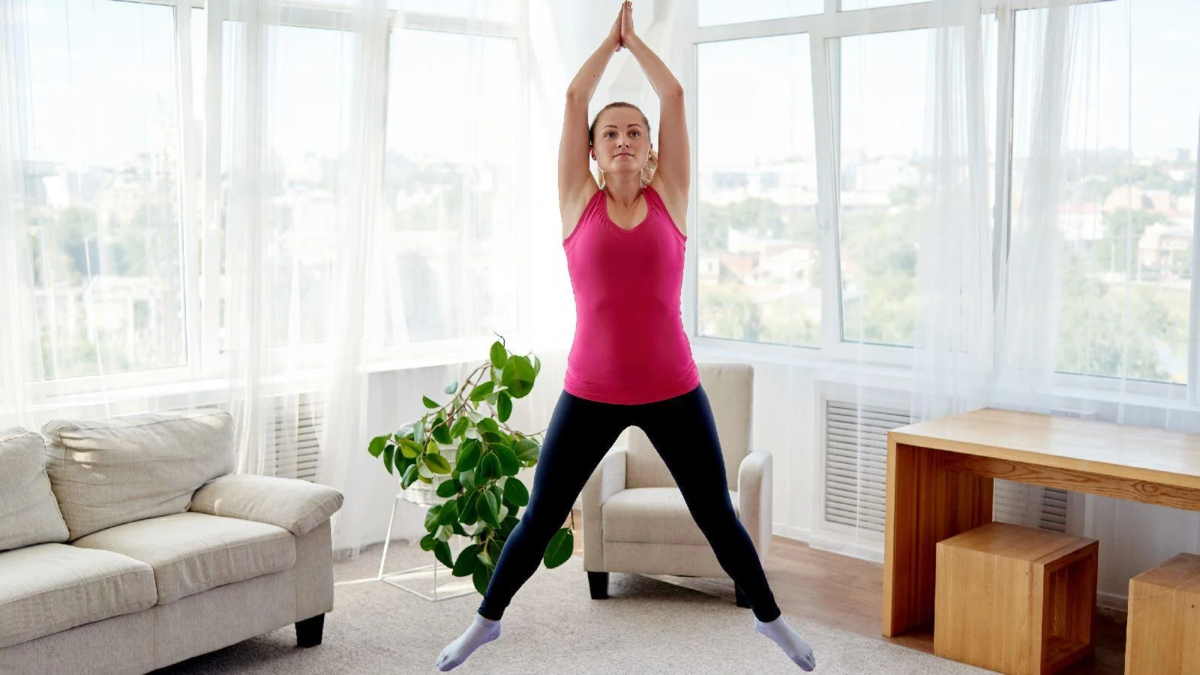
Creating an effective workout plan for losing weight doesn’t require expensive gym memberships or complicated equipment. Research shows that bodyweight exercises deliver similar benefits to traditional gym workouts, including improved cardiovascular fitness. Experts recommend at least 150 minutes of moderate-intensity exercise or 75 minutes of vigorous activity weekly, plus two days of strength training. In this guide, I’ll walk you through the best at home workouts for weight loss, including resistance training to lose weight and compound exercises for weight loss. We’ll cover everything from setting up your space to following a complete weight loss workout plan with exercises at home for weight loss.
This home workout for weight loss is perfect for beginners
Table of Contents
Setting Up Your Home Workout Space
Home Workout for Weight Loss Setup Guide
You don’t need to replicate a commercial gym in your living room. According to fitness experts, building an effective home workout space starts with understanding what equipment supports compound movements and delivers the most versatility for your investment.
this home workout for weight loss is perfect for beginners
Essential Equipment You Actually Need

Prioritizing your equipment purchases prevents wasted money on gadgets that collect dust. I recommend following a tier system that focuses on functionality over flashy promises:
follow this home workout for weight loss daily
Best Home Workout Plan for Weight Loss
Tier 1 (The Foundation): Dumbbells and resistance bands form your essential base. If you only buy one thing for your weight loss workout plan, make it a set of dumbbells. Free weights force your body to stabilize the weight rather than relying on a machine, allowing you to perform hundreds of exercises including squats, lunges, and presses. Start with light, medium, and heavy weights appropriate for your fitness level.home workout for weight loss helps burn fat fast
Resistance bands provide similar strength gains to traditional weights while costing significantly less. These versatile tools allow you to perform compound exercises for weight loss through the entire range of motion.this guide shows the best home workout for weight loss
Tier 2 (The Accelerators): Once you’ve established consistency, a rowing machine engages 85% of your muscles in a single movement, including legs, core, and back. For changing body composition, a squat rack and barbell enable safe, heavy compound lifts like squats and deadlifts.
Tier 3 (Optional): Kettlebells, exercise mats, jump ropes, and benches add variety but aren’t required initially. Skip vibrating plates and ab gadgets entirely. You cannot spot reduce fat from your stomach, and heavy squats will do more for your core than 1,000 crunches on a plastic gadget.
Budget-Friendly Equipment Alternatives
You can build a functional home gym for as little as USD 100 to USD 300 by focusing on essentials. Due to rising equipment costs, creative alternatives make fitness accessible without breaking the bank.
Water bottles and laundry detergent bottles work as weights. Soup cans substitute for hand weights, and a pillow can replace an exercise ball. A chair, countertop, couch, or ottoman provides support for bodyweight exercises. Similarly, a towel or blanket serves as a yoga mat until you invest in dedicated equipment.this home workout for weight loss is perfect for beginners” “follow this home workout for weight loss daily” “home workout for weight loss helps burn fat fast” “this guide shows the best home workout for weight loss
Shop sales during Black Friday or New Year promotions for significant discounts. Many affordable fitness brands offer quality starter kits for beginners. If you’re handy, create your own sandbags or plyometric boxes for a fraction of retail prices.
Creating a Dedicated Workout Area

Your workout zone should fit your space, not the other way around. A 7-foot-by-7-foot area provides enough room to lie down and move around for most at-home workouts. A spare bedroom offers plenty of options, but a corner of your living room, basement, garage, or covered patio works just as well.
Measure your space carefully before purchasing equipment. An ideal workout area should offer room to move around without overcrowding. For smaller spaces, opt for adjustable dumbbells, resistance bands, and foldable benches that minimize your footprint while maximizing exercise variety.
Wall-mounted storage shelves keep yoga mats, foam rollers, and resistance bands organized. Floor storage racks work well if you prefer avoiding wall holes. Foldable or stackable gear maintains organization in tight quarters.
Make your space inviting. Add motivational pictures or quotes, bring in extra lights, include a speaker for music, or mount a mirror. You should feel drawn to your exercise area. In other words, create an environment where you want to spend time, not one that feels like a chore to enter.
Understanding Your Weight Loss Workout Plan
Your workout frequency matters more than the length of individual sessions. The Physical Activity Guidelines for Americans recommend at least 150 minutes of moderate aerobic activity or 75 minutes of vigorous aerobic activity weekly, plus two days of strength training for all major muscle groups. This breaks down to manageable chunks: 30 minutes of cardio five days per week, or 25 minutes six days per week.
How Many Days Per Week You Should Train
Most people see the best results working out three to five days per week. This range supports calorie burn while allowing proper recovery between sessions. If you commit to working out at least four to five days weekly, you’ll see results reflected on the scale and continue making progress over time.
Starting from zero and jumping to daily workouts sets you up for exhaustion and poor performance. Instead, begin with 20 to 30 minutes, two to three days each week, then expand to longer and more frequent workouts as you gain confidence and strength. Your body needs time to adapt. Grueling 90-minute sessions aren’t beneficial for anyone. That time works better split into shorter, more frequent sessions[83].
Consistency drives results more reliably than occasional marathon workouts. Weekly activity totals matter more than hitting an exact daily number. When progress is measured across the week, missing one workout doesn’t derail everything. You simply adjust by adding a longer walk another day or shifting a strength session to the weekend.
Balancing Cardio and Strength Training
Combining cardiovascular exercise and strength training produces faster, more sustainable weight loss than either alone. A balanced approach ensures you get benefits from both: cardio burns calories during exercise, while strength training builds muscle that increases your metabolism even at rest.
Aim for two to three days of cardio and two to three days of strength training each week, with two rest days regardless of which combination you choose. You can structure your week with separate days for each type, or combine both into one workout through circuit training or high-intensity interval training.
For strength sessions, focus on completing enough repetitions at sufficient weight to fatigue your muscles after about 12 to 15 repetitions. Two full-body strength workouts per week work well for most people aiming to lose weight because they provide enough stimulus without crushing recovery. Space these sessions out when possible, like Monday and Thursday, or Tuesday, Thursday, and Saturday.
Setting Realistic Weekly Goals

People who lose weight at a gradual, steady pace of 1 to 2 pounds per week maintain their results better than those who lose weight faster. This requires cutting daily calories by 500 to 750 while moving more.
Set specific, behavior-focused goals rather than vague intentions. Instead of “exercise more,” commit to “walk 15 minutes, three days per week for the first week”. These concrete targets allow you to track progress and stay motivated. Similarly, focusing on weekly exercise targets offers flexibility that daily goals lack. Life happens, work runs late, and energy levels fluctuate.
Sessions should range between 30 and 90 minutes depending on activity. The routine you choose needs to suit your lifestyle so you can maintain it long-term. Sustainable weight loss isn’t linear. Progress comes in fits and starts, and that’s normal.
The Best At Home Workouts for Weight Loss
Selecting the right movements determines whether your workout plan for losing weight delivers results or wastes effort. The exercises I recommend target multiple muscle groups simultaneously, burn maximum calories, and build lean tissue that keeps your metabolism elevated long after you finish.
Compound Exercises for Weight Loss
Compound movements engage several muscle groups at once, making them superior for fat loss. Bodyweight squats utilize your leg muscles, which require high caloric expenditure to contract and perform work. Push-ups challenge your upper body and core simultaneously, expending more calories than working a single muscle group alone.
Walking lunges combine aerobic conditioning with strength training for powerful calorie burning. Lateral lunges target the glutes rather than the quads, adding variety to your lower body work. Burpees get you sweating and fire up your heart rate quickly. Mountain climbers target your core and upper body while delivering cardio benefits.
Dips offer a convenient way to hit your chest, shoulders, and triceps at once. Targeting multiple muscle groups expends calories more efficiently than isolation work. Glute bridges work the muscles around your hips and help you build lean muscle tissue in an area that tends to hold onto fat.
Bodyweight Cardio Exercises
Jumping jacks increase your calorie expenditure while challenging your aerobic system, balance, and coordination. High knees rapidly drive your knees upward, elevating your heart rate and building lower-body explosiveness. Skater jumps mimic the lateral movement of speed skaters, improving balance, coordination, and agility while boosting cardio.
Butt kicks target the hamstrings and increase stride speed. Jump squats add an explosive element to basic squats, burning calories and building strength simultaneously. Plank jacks start in a plank position and jump your feet out and in like a horizontal jumping jack, engaging your core while elevating your heart rate.
Resistance Training to Lose Weight
Strength training creates an EPOC (Excess Post-exercise Oxygen Consumption) effect, meaning your body continues burning calories for hours after you finish. Building lean muscle raises your resting metabolic rate because muscle tissue burns more calories at rest than fat mass.
Focus on compound movements that engage multiple major muscle groups. Bodyweight exercises like squats, push-ups, and lunges provide excellent starting points. Progressive overload remains essential for fat loss, so continue adding repetitions as workouts become easier.
Core Strengthening Movements
Core exercises strengthen the abdominal muscles, back muscles, and muscles around the pelvis. Planks build muscles in the abdomen, back, and side simultaneously. Side planks work your obliques and contribute to balanced core muscles.
Dead bugs target the deep abdominal muscles to build a stronger core while challenging your upper and lower body coordination. Glute bridges (also called back bridges) raise your hips off the floor until your hips line up with your knees and shoulders. The quadruped exercise, sometimes called the bird dog, starts on your hands and knees and involves raising opposite arm and leg.
Your Complete 4-Week Weight Loss Workout Plan
This weight loss workout plan runs five training days and two rest days each week. The structure includes three strength sessions and two cardio sessions. If five days feels overwhelming initially, drop to four and add the fifth when you’re ready. The framework stays constant across all four weeks, but intensity increases progressively.
Week 1-2: Building Your Foundation
Your first two weeks focus on learning movements and establishing consistency. Start with 2-3 sets of 10-12 repetitions using moderate weight. Week one emphasizes proper form above all else. For cardio, perform 25-30 minutes of steady-state work and 15 minutes of HIIT.
Week two maintains the same rep range but allows you to increase weight where form permits. Correspondingly, extend steady cardio to 30-35 minutes and HIIT to 18 minutes. You’re still building the habit at this point, so focus on showing up consistently rather than pushing maximum intensity.
Week 3-4: Increasing Intensity
Week three shifts to 3-4 sets of 8-10 reps with heavier loads. Fewer reps with more weight triggers strength gains and muscle growth. Steady-state cardio extends to 35-40 minutes while HIIT reaches 20 minutes.
Week four represents your peak effort. Complete 4 sets of 8-10 reps with the heaviest weight you’ve used yet. Push yourself to test limits and measure progress. Cardio sessions hit 40 minutes for steady work and 25 minutes for HIIT.
Sample Weekly Schedule
Monday and Saturday target full-body workouts using compound movements. Thursday focuses on either upper or lower body splits, alternating each week. Keep reps between 8-12 and rest 60-90 seconds between sets.
Tuesday delivers steady-state cardio at a conversational pace for 30-40 minutes. Friday switches to high-intensity intervals with 30 seconds on, 30 seconds off.
Wednesday and Sunday are rest days where light movement like yoga, walking, or stretching helps recovery without adding training stress.
Beyond Exercise: Supporting Your Weight Loss Journey
Exercise forms only half of your weight loss workout plan. What you eat, how you recover, and how you track progress determine whether your efforts translate into lasting results.
Nutrition Basics for Home Workouts
Eat breakfast at least one hour before morning workouts to fuel performance. Focus on carbohydrates like whole-grain cereals, low-fat milk, bananas, or yogurt. For workouts longer than 60 minutes, consume 30 to 90 grams of carbohydrates per hour through options like low-fat yogurt, raisins, or bananas. Post-workout, eat a meal with both carbohydrates and protein within two hours to help muscles recover and replace glycogen stores. Drink roughly 2 to 3 cups of water during the 2 to 3 hours before exercise, then about 1/2 to 1 cup every 15 to 20 minutes during your workout.
Recovery and Rest Days
Rest days allow your muscles, connective tissues, and joints to heal from microscopic damage caused by resistance training to lose weight. Active people should eat at least 1.6 grams of protein per kilogram of body weight daily to support muscle repair during rest. Take at least one rest day from intense workouts each week. High-intensity work without sufficient rest elevates cortisol levels, which promotes fat storage around the abdomen.
Tracking Your Progress
Tracking calories and exercise consistently proves effective for weight management. Body measurements often show progress faster than scale weight, especially when building muscle and losing fat simultaneously. Focus on skeletal muscle mass, body-fat percentage, and visceral fat rather than weight alone. Track intuitive markers like sleep quality, energy levels, and stress resilience on a scale of 1-10.
Staying Motivated Without a Gym
Motivation fluctuates, but discipline sustains progress. Habit formation requires approximately 66 days of consistent practice. Action precedes motivation, not the reverse. Connect your fitness routine to something deeper than appearance by identifying your personal reason for exercising. Keep a daily log noting small wins like “moved my body intentionally” or “talked to someone new”.
Conclusion
Building an effective weight loss workout plan at home doesn’t require expensive equipment or complicated routines. As shown above, bodyweight exercises and minimal gear deliver real results when you stay consistent. The 4-week plan I’ve shared gives you everything needed to start burning fat and building strength from your living room.
Above all, remember that showing up matters more than perfection. Start with two or three days per week, focus on proper form, and gradually increase intensity as your body adapts. Combined with smart nutrition and adequate rest, these at-home workouts will help you reach your weight loss goals without ever stepping foot in a gym.
Check our belly fat loss guide here